
How Credit Scores Work in India: What Banks Really Check
Bullit Team | 2026-07-14
Introduction
Many people think their credit score only matters when they want a home loan. That’s not quite correct.
It starts to matter much earlier. A credit card application, a personal loan, or a vehicle loan can all be affected. Sometimes, it can even influence the interest rate you receive. You might have a good salary and no major financial issues, yet still face a disappointing response from a bank because your credit report tells a different story.
In India, most people refer to this as a CIBIL score. CIBIL is one of the credit bureaus. Experian, Equifax, and CRIF High Mark also gather credit data. However, CIBIL is the name that people recognize, so it has become almost synonymous with your entire credit history.
It’s important to understand this: banks are not judging you as a person. They are trying to estimate how risky it would be to lend you money.
They base this estimate on your past behavior.
What a Credit Score Actually Means
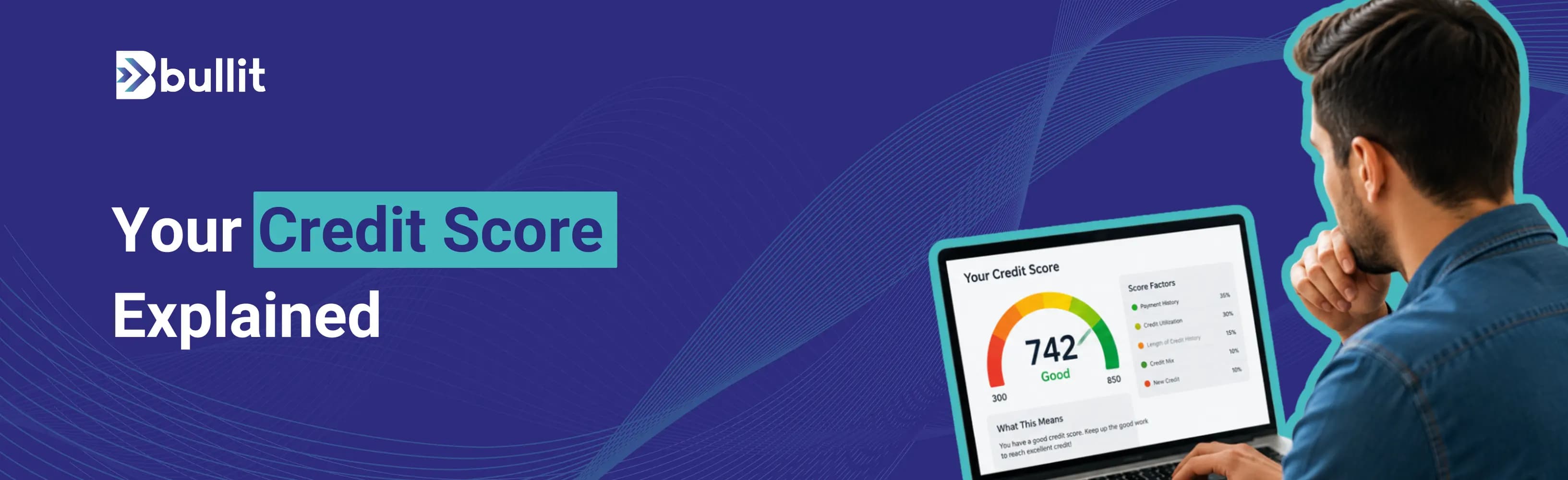
Your credit score typically ranges from 300 to 900.
A higher score generally reassures lenders. However, a good score does not guarantee approval, like scoring 90 out of 100 on a test.
Think of it as your financial reputation.
If your report shows that you borrowed money, paid it back on time, and didn’t max out your credit cards, lenders see fewer warning signs. But if your report displays late payments, high card balances, or numerous loan applications in a short period, lenders may proceed with caution.
Yet, the score is only the first layer.
A bank will also check your salary, existing EMIs, bank account activity, tax returns, GST filings, business income, and even the purpose of the loan. This is why two people with similar scores may receive very different loan offers.
One person might have a score of 780 but be paying too many EMIs each month. Another could have a score of 740, low debt, and a steady income. Often, the second individual appears less risky.
So yes, your score is important, but it doesn’t tell the whole story.
What are factors that pull Your Score Down?
Most people don’t damage their credit score with a single big mistake. It usually happens through everyday actions.
You might miss a bill while traveling. A credit card payment may be delayed by a few days. You could take on another card for a cashback offer, then apply for a personal loan just to check your eligibility. At the time, none of these seem serious.
But together, they can create a pattern.
- Late payments are the biggest issue. One late payment alone might not ruin everything, but repeated delays are hard to overlook. Banks need to know whether you pay when you’re supposed to. If your report keeps showing overdue amounts, that raises red flags.
- Credit card usage is important too.Let’s say your total credit limit is ₹1 lakh. If you regularly use ₹85,000 or ₹90,000 each month, you may appear financially stretched. You might still be paying on time, but lenders see that you rely heavily on credit.
This is where people get caught up in the “minimum due” option.
Paying the minimum keeps your account from being marked as unpaid right away. But it doesn’t mean your card debt is healthy. The balance remains, interest continues to accumulate, and your credit utilization stays high.
3. Another issue is applying for too much credit all at once.
A few applications are normal, but if you apply to five different lenders in ten days, it can seem like you urgently need to borrow money. That makes lenders nervous.
Why a Good CIBIL Score Still Does Not Guarantee a Loan This is likely the part that frustrates people the most.
You check your score, and it’s above 750. You feel relieved. Then your loan gets rejected anyway.
This occurs because lenders aren’t just asking, “Did this person repay old loans?” They’re also asking, “Can this person manage one more EMI right now?”
A good score cannot solve cash flow issues.
For instance, you may have paid every previous EMI on time, but your salary might already be tied up in rent, school fees, insurance, and existing loans. Your bank account could show frequent low balances. Or your business income might have decreased in recent months.
For business owners, the situation is even more complex.
Your personal score may be significant, especially if you’re personally guaranteeing a business loan. But lenders will also review your business records. They may check GST returns, ITRs, bank statements, registration documents, revenue trends, and repayment capability.
That’s why compliance is more important than many founders realize.
A proper Udyam registration, updated GST filings, and clean business bank records can simplify the loan process. They demonstrate to lenders that your business is active and well-organized.
No one expects a small business to be perfect. But they do expect the numbers to make sense.
The Credit Mistake Many MSME Owners Make
Small business owners often use personal funds to keep the business afloat.
This is understandable. A supplier needs payment. Inventory must be purchased. A client may have delayed payment. So the owner uses a personal credit card or takes a personal loan to fill the gap.
The problem is that this can slowly damage your personal credit profile.
Business expenses start piling up on personal cards. Card utilization increases. Then one delayed client payment turns into a delayed credit card bill. Before long, the business cash-flow problem appears on your personal CIBIL report.
That can complicate future borrowing.
Separating business and personal finances may seem basic, but it helps more than people think. Use a business bank account. Track expenses carefully. Don’t fund long-term needs with high-interest credit card debt. Keep GST records, tax filings, invoices, and bank statements organized.
When you apply for an MSME loan, lenders should be able to understand your business without having to guess what are personal expenses and what are business expenses.
Platforms like Bullit can help entrepreneurs explore MSME loan options and prepare the documents lenders typically request.
How to Improve a Weak Credit Score?
There’s no quick fix for a damaged credit score..
The good news is that credit scores can improve with better behavior. It just takes time.
Start by paying every EMI and card bill on time. Set reminders. Use auto-pay where you can. Don’t rely on memory, especially with multiple due dates.
Try to gradually lower credit card balances. Even reducing a large outstanding amount over a few months can make a difference.
Avoid applying for every loan or card offer you find online. Compare options first. Apply only where you have a realistic chance of approval.
Also, check your credit report from time to time. Errors do occur. An old loan may appear as active. A payment might be marked late even though you paid it. You may see an inquiry you don’t recognize. If something seems wrong, raise a dispute with the lender and bureau promptly.
The strategy isn’t exciting, but it works: pay on time, borrow thoughtfully, maintain balances under control, and avoid panic applications for credit.